Compare complete cycles
Convert claims to a common unit such as kilowatt-hours per cycle when the necessary figures are available. A lower-power cleaner running much longer may use similar energy to a higher-power design that completes the required mode sooner.
Choose only needed coverage
A floor-only maintenance cycle may use less time than a full wall and waterline program. Select the mode that matches current debris rather than automatically choosing the most intensive option.
Keep water flow unrestricted
Clean filters and intakes allow the robot to operate as designed. Restricted flow can reduce pickup and lead to repeated cycles. Maintain brushes and drive parts so traction problems do not waste operating time.
Limit standby use
Follow instructions for disconnecting or managing chargers and control units between uses. Do not defeat required battery management or safety functions merely to reduce standby consumption. Smart plugs are inappropriate unless expressly approved for the equipment.
Consider the whole pool system
Robotic cleaning does not replace required filtration and circulation. Coordinate cleaner timing with the pool-care plan without making unsupported claims about pump savings. Water quality and safety take priority over a small electricity reduction.
Use the robotic pool cleaner decision framework to compare the broader category, or narrow the catalog through Robotic Pool Cleaners for In-Ground Pools.
Exact products to compare
As an Amazon Associate, we may earn from qualifying purchases.

Dolphin Nautilus CC Automatic Robotic Pool Cleaner
Best for: Owners who want a compact established corded cleaner
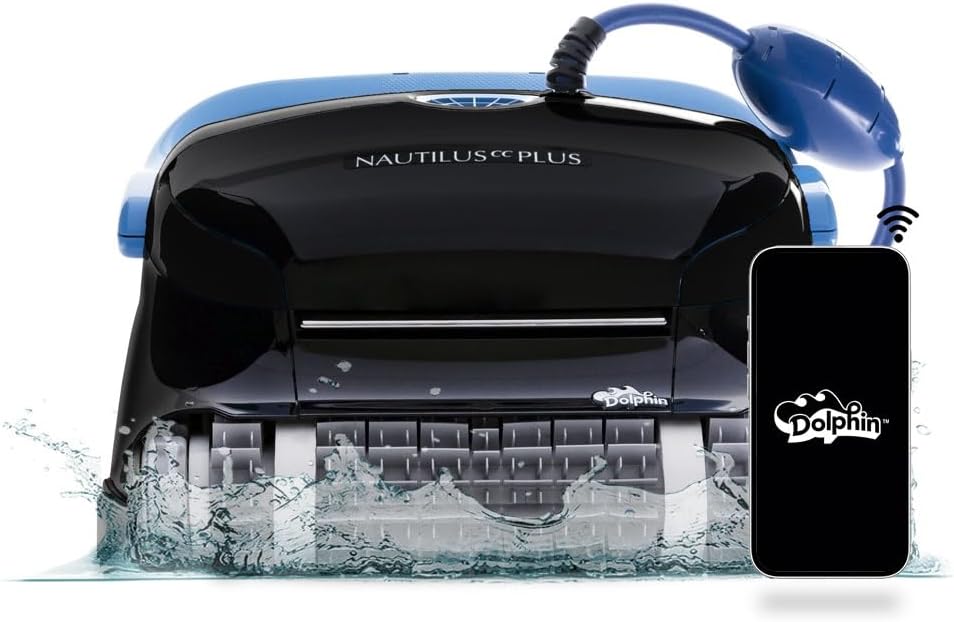
Dolphin Nautilus CC Plus Robotic Pool Cleaner
Best for: Buyers comparing a widely searched midrange Dolphin

Dolphin Nautilus CC Supreme Wi-Fi Robotic Pool Cleaner
Best for: Large pools needing broader cleaning-zone coverage
Frequently asked questions
How do I estimate cost per cycle?
Multiply estimated kilowatt-hours per cycle by your electricity rate. Clearly label power, duration, charger losses, taxes, and utility fees as inputs or omissions rather than presenting a universal cost.
Are cordless robots more efficient?
Not inherently. Battery charging adds conversion losses, while corded systems have their own controller consumption. Compare documented energy for equivalent cleaning work.
Does an eco mode clean as well?
It depends on what the mode changes and the pool condition. Review the model description and use a more complete cycle when debris or required surfaces exceed the eco program's purpose.
Final decision
Match the answer above to the exact model manual, pool measurements and maintenance routine. Amazon listings can change by seller, bundle and generation, so verify the product name and ASIN before relying on a feature.