Map the pool before comparing models
Record the longest dimension, deepest point, finish, entry style and obstacles such as drains, benches, ladders and raised transitions. A rectangular plaster pool presents a different navigation problem from a freeform vinyl pool. Manufacturer compatibility statements should cover the actual dimensions and surface rather than a nearby size category.
Match coverage to the work
Floor-only cleaning can be enough when walls are brushed manually. Buyers seeking less hands-on maintenance should look for explicit floor, wall and waterline coverage. Wall-climbing language alone does not confirm consistent waterline scrubbing, step cleaning or performance on a sharp floor-to-wall angle.
Choose filtration for local debris
Large leaves need an accessible basket with useful capacity; sand, pollen and dead algae call for finer filtration. A fine filter may clog quickly during leaf season, while a coarse basket can return small particles to the water. Interchangeable filter options are valuable when debris changes through the year.
Consider ownership effort
Check loaded weight, handle position, cable storage or charging routine, basket access and the availability of brushes, tracks and filters. A capable cleaner that is awkward to lift may be used less often. For deep pools, retrieval design matters because pulling on a power cable can damage it.
Verify limitations before purchase
Product pages often show ideal pools. Read the current manual for slope limits, compatible finishes, minimum water depth and instructions concerning covers, chemicals and swimmers. No consumer cleaner should be assumed to clean every stair tread, tanning ledge or tight corner without occasional manual help.
Use the robotic pool cleaner decision framework to compare the broader category, or narrow the catalog through Robotic Pool Cleaners for In-Ground Pools.
Exact products to compare
As an Amazon Associate, we may earn from qualifying purchases.

Dolphin Nautilus CC Automatic Robotic Pool Cleaner
Best for: Owners who want a compact established corded cleaner
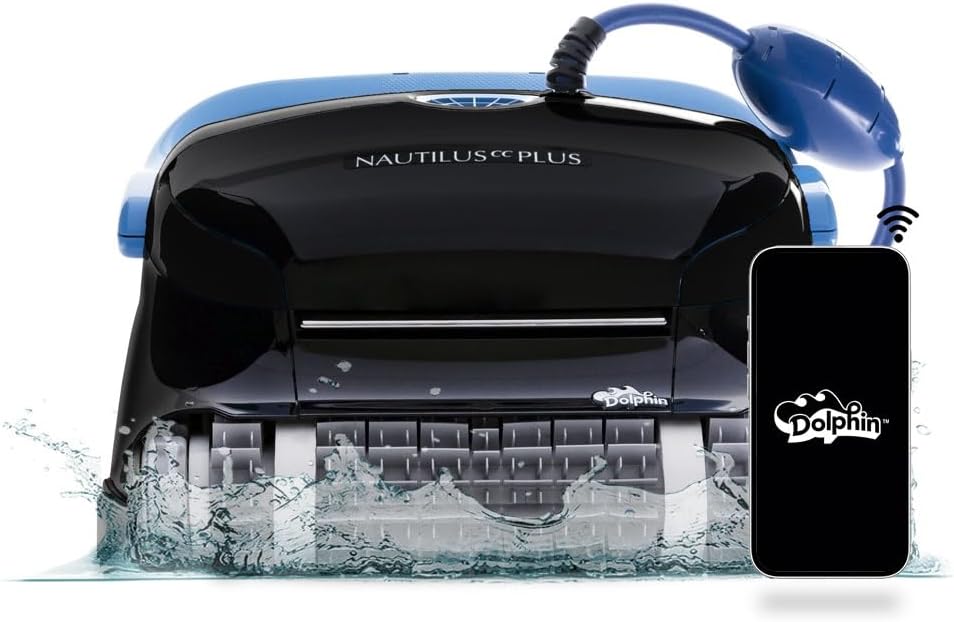
Dolphin Nautilus CC Plus Robotic Pool Cleaner
Best for: Buyers comparing a widely searched midrange Dolphin

Dolphin Nautilus CC Supreme Wi-Fi Robotic Pool Cleaner
Best for: Large pools needing broader cleaning-zone coverage
Frequently asked questions
Do inground pool robots clean steps?
Some can reach broad, submerged steps, but narrow treads and shallow ledges often interrupt traction. Consider step cleaning a bonus unless the manufacturer explicitly supports the geometry of your pool.
Is cordless always better for an inground pool?
No. Cordless removes cable handling, while corded designs offer continuous power and can suit frequent cycles. Pool size, charging discipline and preferred maintenance routine decide the better format.
Should the cleaner climb the waterline?
Waterline cleaning is useful where oils and residue collect, but it is not essential if you already brush that band. Confirm that the model specifies waterline coverage rather than only wall climbing.
Final decision
Match the answer above to the exact model manual, pool measurements and maintenance routine. Amazon listings can change by seller, bundle and generation, so verify the product name and ASIN before relying on a feature.