Calculate labor saved
Estimate how often you manually vacuum, brush, or hire cleaning help. A robot has more value when debris returns quickly or the pool is used often. It will not eliminate testing, chemical adjustment, skimming, or brushing of unreachable steps and corners.
Buy only the coverage you need
Waterline cleaning, wall climbing, surface skimming, apps, and scheduling can raise the price. Treat each as a separate feature. If leaves settle only on a flat floor, reliable pickup and a roomy accessible basket may matter more than remote steering.
Consider the handling routine
Check dry weight, likely wet weight, handle design, retrieval method, cable length, charger arrangement, and basket access. A capable cleaner that is unpleasant to lift or clean may be used less often, reducing the return on the purchase.
Plan for ownership costs
Filters, brushes, tracks, batteries, cables, power supplies, and motors do not all have the same warranty or expected wear. Confirm parts availability and service options. Warranty coverage can depend on the seller, region, registration, and whether an item is considered wearable.
Compare evidence, not headline numbers
Flow rates, micron claims, runtime, and coverage limits may be measured differently across brands or operating modes. Compare like with like and read the manual. Pool size, debris load, temperature, filter condition, and cleaning mode can change real-world results.
Use the robotic pool cleaner decision framework to compare the broader category, or narrow the catalog through Robotic Pool Cleaners for In-Ground Pools.
Exact products to compare
As an Amazon Associate, we may earn from qualifying purchases.

Dolphin Nautilus CC Automatic Robotic Pool Cleaner
Best for: Owners who want a compact established corded cleaner
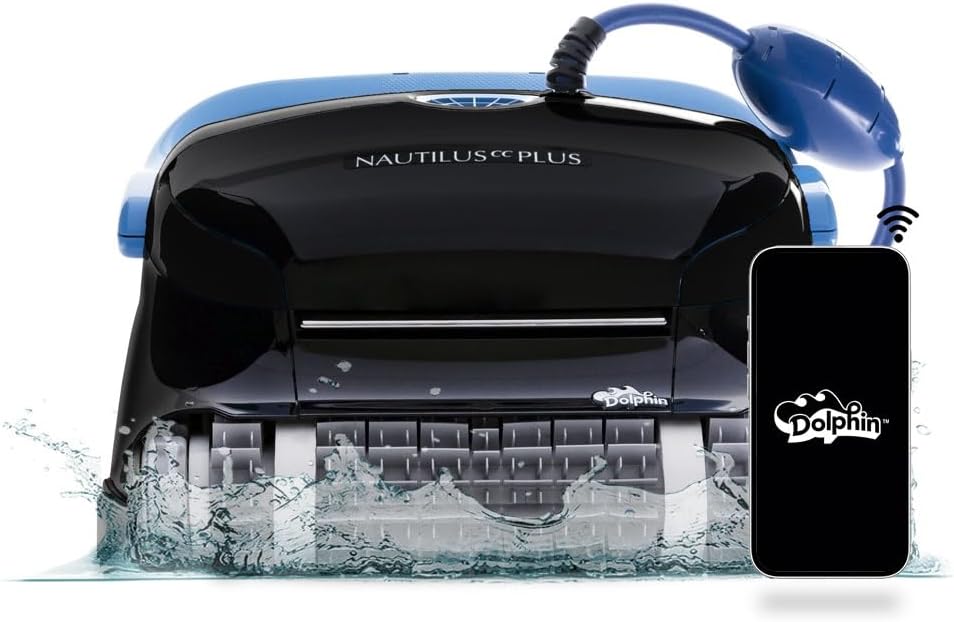
Dolphin Nautilus CC Plus Robotic Pool Cleaner
Best for: Buyers comparing a widely searched midrange Dolphin

Dolphin Nautilus CC Supreme Wi-Fi Robotic Pool Cleaner
Best for: Large pools needing broader cleaning-zone coverage
Frequently asked questions
Do robotic cleaners save electricity?
They operate independently of the main pump, but exact consumption and any savings depend on the model and the existing circulation schedule. Do not shorten essential filtration solely because a robot collected debris.
How long should a pool robot last?
There is no universal lifespan. Frequency of use, chemistry, storage, maintenance, repairability, and replacement-part support all matter. A strong warranty is useful, but read exclusions for filters and other wear items.
Is cordless always better than corded?
No. Cordless models remove floating-cable management but require charging and have finite runtime. Corded models can complete powered cycles without recharging but require safe power-supply placement and cable care.
Final decision
Match the answer above to the exact model manual, pool measurements and maintenance routine. Amazon listings can change by seller, bundle and generation, so verify the product name and ASIN before relying on a feature.