The cleaning path
Entry-level cleaners may follow timed direction changes, while more advanced units use sensors or calculated routes. A path that looks random can still provide coverage over a full cycle. Pool shape, obstacles, drains, slopes, and cable freedom affect the route.
Scrubbing and suction
Brushes agitate dirt so water flow can carry it into the filter. Brush material and traction must suit the pool finish. Fine dust may require a finer filter than leaves, and a clogged filter can reduce flow even when the robot still moves.
Independent filtration
Debris stays in the robot rather than going directly to the pool filter. That can reduce the burden on the main system, but the pool pump still performs essential circulation and chemical distribution. Empty the robot's basket rather than treating it as permanent storage.
Floor, wall, and waterline coverage
These are separate specifications. A floor-only cleaner should not be expected to climb. A wall-capable model may still skip steps, narrow ledges, sharp transitions, or shallow tanning shelves. Confirm the exact model's minimum depth and supported cleaning zones.
What automation cannot do
A robot cannot confirm safe water chemistry, repair damaged plaster or liners, remove every stain, or sanitize contaminated water. Brush inaccessible areas manually and use normal pool-care practices. The machine is one cleaning tool, not a complete pool-maintenance system.
Use the robotic pool cleaner decision framework to compare the broader category, or narrow the catalog through Robotic Pool Cleaners for In-Ground Pools.
Exact products to compare
As an Amazon Associate, we may earn from qualifying purchases.

Dolphin Nautilus CC Automatic Robotic Pool Cleaner
Best for: Owners who want a compact established corded cleaner
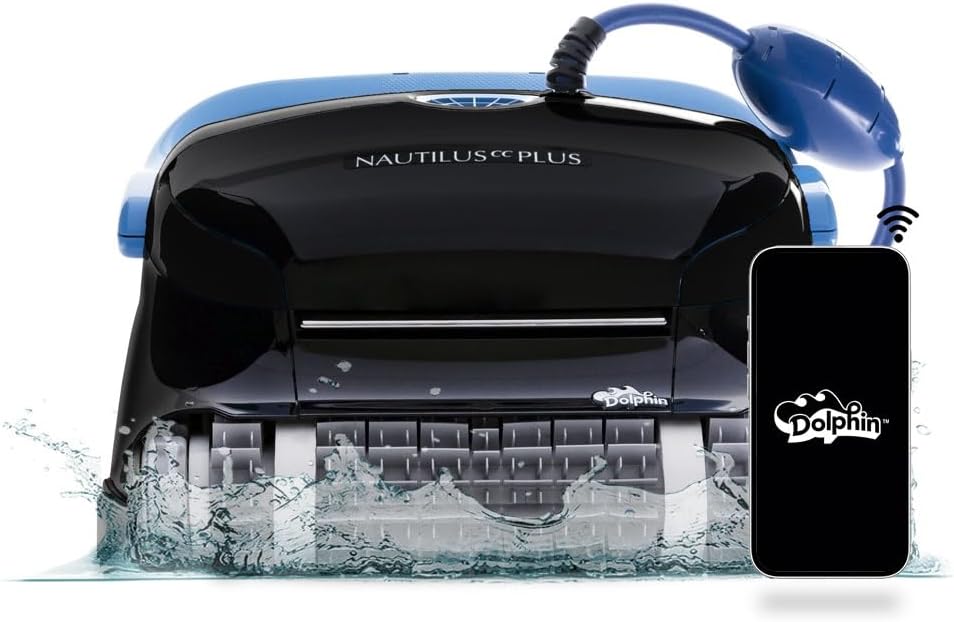
Dolphin Nautilus CC Plus Robotic Pool Cleaner
Best for: Buyers comparing a widely searched midrange Dolphin

Dolphin Nautilus CC Supreme Wi-Fi Robotic Pool Cleaner
Best for: Large pools needing broader cleaning-zone coverage
Frequently asked questions
Does a robotic pool cleaner need the pool pump running?
Usually no. True robotic cleaners have their own drive, suction, and filter system. Check the manual because other automatic-cleaner types use pool suction or a booster pump.
Does a pool robot map the pool?
Some models advertise mapping or optimized navigation; others use timed algorithms and obstacle responses. Do not assume app connectivity means the cleaner creates or stores a map.
Can a robot remove algae?
It may collect loosened or dead algae-like debris with the appropriate fine filter, but it does not kill algae or correct unsafe chemistry. Treat the water and brush surfaces as required.
Final decision
Match the answer above to the exact model manual, pool measurements and maintenance routine. Amazon listings can change by seller, bundle and generation, so verify the product name and ASIN before relying on a feature.