Pattern-based movement
Basic navigation can alternate forward travel, turns, and direction changes according to programmed timing. The route may look random while still being designed to create overlapping coverage. Repetition is not by itself evidence that a robot is lost.
Sensor-assisted decisions
Internal orientation sensors, motor-load readings, or contact events can help a robot recognize changes in direction, slope, traction, or boundaries. The exact sensor package varies, and manufacturers do not always expose every input or algorithm.
Mapping is not always stored
A cleaner may calculate movement during the current cycle without producing a permanent map. Do not assume an app will show rooms, no-go zones, or route history unless those functions are specifically documented for that model and software version.
The pool changes the route
Drain covers, ladders, steps, coves, wrinkles, curves, water flow, and surface condition can alter traction or redirect movement. Correct setup and a clean drive system often matter as much as sophisticated route logic.
Judge coverage over time
One visible pass is not the whole cleaning strategy. A complete cycle may intentionally revisit areas from different angles. If sections remain consistently untouched, check placement, brushes, tracks, filters, and manufacturer troubleshooting guidance before changing settings.
Use the robotic pool cleaner decision framework to compare the broader category, or narrow the catalog through Robotic Pool Cleaners for In-Ground Pools.
Exact products to compare
As an Amazon Associate, we may earn from qualifying purchases.

Dolphin Nautilus CC Automatic Robotic Pool Cleaner
Best for: Owners who want a compact established corded cleaner
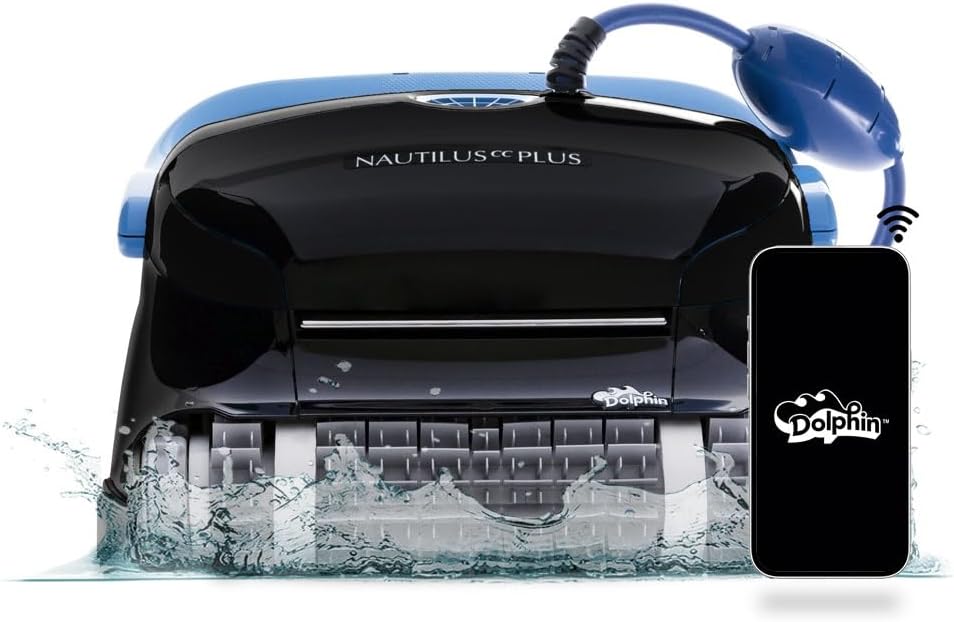
Dolphin Nautilus CC Plus Robotic Pool Cleaner
Best for: Buyers comparing a widely searched midrange Dolphin

Dolphin Nautilus CC Supreme Wi-Fi Robotic Pool Cleaner
Best for: Large pools needing broader cleaning-zone coverage
Frequently asked questions
Does a pool robot use GPS?
Consumer pool cleaners generally operate underwater, where ordinary satellite GPS signals are not a practical navigation source. They typically rely on onboard movement logic and sensors. Check the manufacturer's description for the specific model.
Why does my cleaner repeat the same path?
Overlapping passes can be normal. Persistent looping may also reflect an obstruction, dirty drive components, worn brushes, cable influence, trapped air, or unsuitable settings. Follow the manual's inspection sequence.
Can I edit the map?
Only if the exact cleaner and app explicitly support map viewing or editing. Many products marketed with smart navigation do not provide a household-vacuum-style editable map.
Final decision
Match the answer above to the exact model manual, pool measurements and maintenance routine. Amazon listings can change by seller, bundle and generation, so verify the product name and ASIN before relying on a feature.