Detection differs from recognition
A cleaner may notice that its wheels or tracks have slowed and then reverse. That does not mean it has visually recognized a drain or classified an object. Avoid assuming camera-like awareness unless the manufacturer expressly documents it.
Fixed obstacles vary
Ladders, handrails, drains, lights, raised fittings, and safety ledges differ greatly among pools. Check the manual for known limitations and required clearances. Remove detachable items when instructed and never alter safety equipment merely to accommodate a cleaner.
Traction affects escape
Dirty brushes, worn tracks, algae, a full filter, or a slick surface can reduce the robot's ability to turn away after sensing resistance. Routine maintenance may resolve behavior that looks like a navigation or sensor failure.
Loose items remain hazards
Take out toys, thermometers, hoses, covers, and other loose objects before a cycle when the instructions call for a clear pool. Sensors should not be treated as permission to operate around entanglement risks.
Observe recurring trouble spots
If the robot repeatedly hangs up in one location, stop operation and identify the geometry involved. Consult model-specific support before adding accessories, changing drain covers, or using any workaround that could affect pool safety or warranty coverage.
Use the robotic pool cleaner decision framework to compare the broader category, or narrow the catalog through Robotic Pool Cleaners for In-Ground Pools.
Exact products to compare
As an Amazon Associate, we may earn from qualifying purchases.

Dolphin Nautilus CC Automatic Robotic Pool Cleaner
Best for: Owners who want a compact established corded cleaner
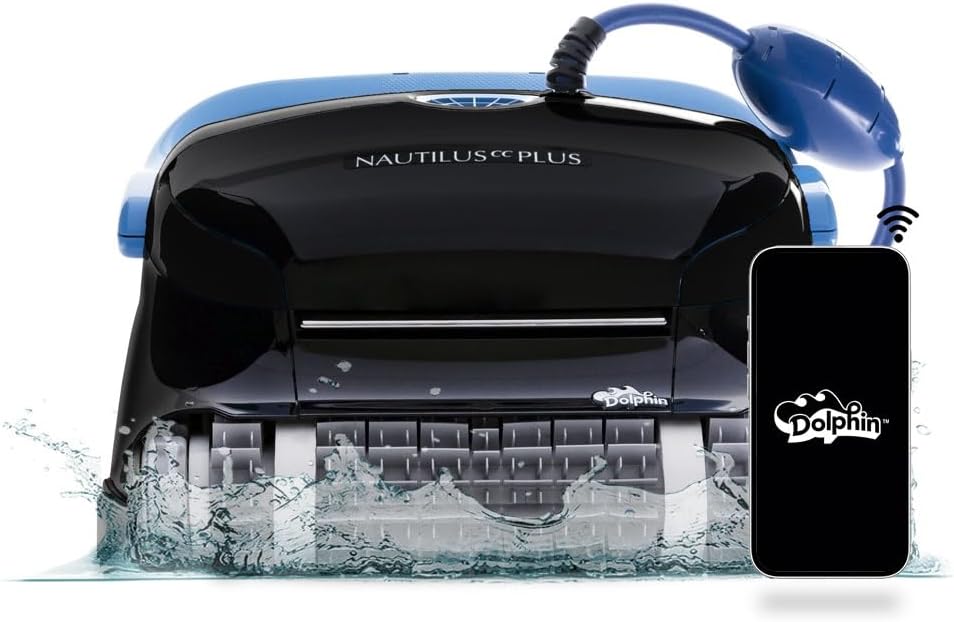
Dolphin Nautilus CC Plus Robotic Pool Cleaner
Best for: Buyers comparing a widely searched midrange Dolphin

Dolphin Nautilus CC Supreme Wi-Fi Robotic Pool Cleaner
Best for: Large pools needing broader cleaning-zone coverage
Frequently asked questions
Will obstacle sensors prevent every collision?
No. Many cleaners respond to contact or drive resistance rather than avoiding all objects in advance. Some contact with pool boundaries is part of normal navigation.
Can a robot get stuck on a main drain?
It can happen with certain combinations of cleaner design, drain shape, suction conditions, and pool surface. Review the pool and cleaner manuals and use only manufacturer-approved remedies.
Should I run the cleaner with swimmers present?
Follow the manufacturer and pool-safety instructions. Many manuals prohibit use while people are in the pool. Sensors are navigation aids, not swimmer-safety systems.
Final decision
Match the answer above to the exact model manual, pool measurements and maintenance routine. Amazon listings can change by seller, bundle and generation, so verify the product name and ASIN before relying on a feature.