Where the debris goes
Robots capture material in an onboard basket or filter that is removed and rinsed. Suction cleaners move debris through a skimmer or dedicated suction line toward a pump basket and pool filter. Heavy leaves can fill either path, but the cleanup location and plumbing impact are different.
Energy and circulation
A robot uses electricity through a power supply or battery and works independently of the main circulation schedule. A suction cleaner needs the pool pump running at enough flow to move it reliably, so the pump setting, plumbing condition, and other suction demands shape performance.
Navigation and coverage
Robots may use sensors, programmed turns, or mapping logic to vary their route. Suction cleaners commonly move according to hydraulic behavior and pool geometry. Steps, sharp corners, drains, and hose length can create missed areas for either type, so coverage claims should be model-specific.
Installation and daily effort
A suction unit requires correctly sized hoses, a suitable connection, and flow adjustment. Once configured, it can be mechanically simple. A robot is more self-contained but must be lifted out, opened, and cleaned; larger models and water-filled baskets can feel heavy at the pool edge.
Budget beyond purchase price
Suction cleaners often cost less initially, but worn hoses, diaphragms, and increased pump runtime belong in the ownership calculation. Robots have motors, tracks, electronics, filters, and sometimes batteries. Compare available replacement parts and local service before deciding.
Use the robotic pool cleaner decision framework to compare the broader category, or narrow the catalog through Robotic Pool Cleaners for In-Ground Pools.
Exact products to compare
As an Amazon Associate, we may earn from qualifying purchases.

Dolphin Nautilus CC Automatic Robotic Pool Cleaner
Best for: Owners who want a compact established corded cleaner
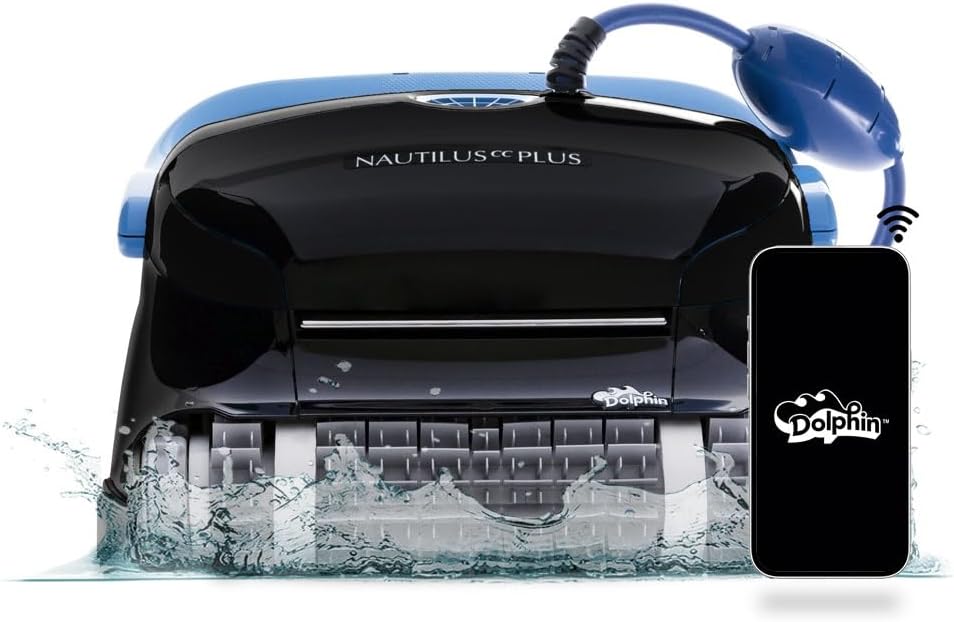
Dolphin Nautilus CC Plus Robotic Pool Cleaner
Best for: Buyers comparing a widely searched midrange Dolphin

Dolphin Nautilus CC Supreme Wi-Fi Robotic Pool Cleaner
Best for: Large pools needing broader cleaning-zone coverage
Frequently asked questions
Does a robotic cleaner replace the pool filter?
No. It can remove debris and reduce some load, but the pool circulation and sanitation system still handles water treatment and overall filtration.
Can a suction cleaner pick up fine dirt?
It can when flow, cleaner condition, and the pool filter are appropriate. Very fine material may pass through or increase filter-cleaning frequency.
Which is better for leaves?
An onboard robot with a roomy coarse basket can be convenient, while a suction system may benefit from an inline leaf canister. The best choice depends on leaf volume and opening size.
Final decision
Match the answer above to the exact model manual, pool measurements and maintenance routine. Amazon listings can change by seller, bundle and generation, so verify the product name and ASIN before relying on a feature.