Power delivery and cleaning sessions
A corded robot can continue operating for its programmed cycle without a battery ceiling, which suits long or repeated sessions. A cordless model has a fixed energy budget, so pool size, debris load, water temperature, and climbing effort can influence whether one charge finishes the job.
Cable handling versus charging
Corded ownership means laying out, untwisting, and storing a floating cable while keeping the power supply dry and correctly positioned. Cordless ownership swaps that routine for charging, connector care, and remembering to remove the unit before its battery is depleted too deeply.
Movement and retrieval
No cord means fewer opportunities for a robot to loop around its own cable or leave excess line across the deck. However, a stopped cordless unit may need a retrieval hook or accessible handle, while many corded machines can be guided closer by their cable before being lifted by the handle.
Pool layout and access
A compact pool with a nearby code-compliant outlet can make a corded cleaner straightforward. Cordless designs are attractive for pools where the equipment area is awkward, the deck is busy, or owners want to clean without routing a cable past furniture and walkways.
Long-term ownership
Compare replacement parts rather than treating either format as maintenance-free. Corded units can need cable, swivel, or power-supply service; cordless units add a rechargeable battery whose capacity will decline. Warranty language and the availability of battery service deserve attention before purchase.
Use the robotic pool cleaner decision framework to compare the broader category, or narrow the catalog through Cordless Robotic Pool Cleaners.
Exact products to compare
As an Amazon Associate, we may earn from qualifying purchases.

Aiper Scuba S1 Current Cordless Robotic Pool Cleaner
Best for: Owners who want cable-free handling and multi-zone cleaning

Aiper Scuba S1 Cordless Robotic Pool Cleaner
Best for: Cable-free cleaning for common residential in-ground pools
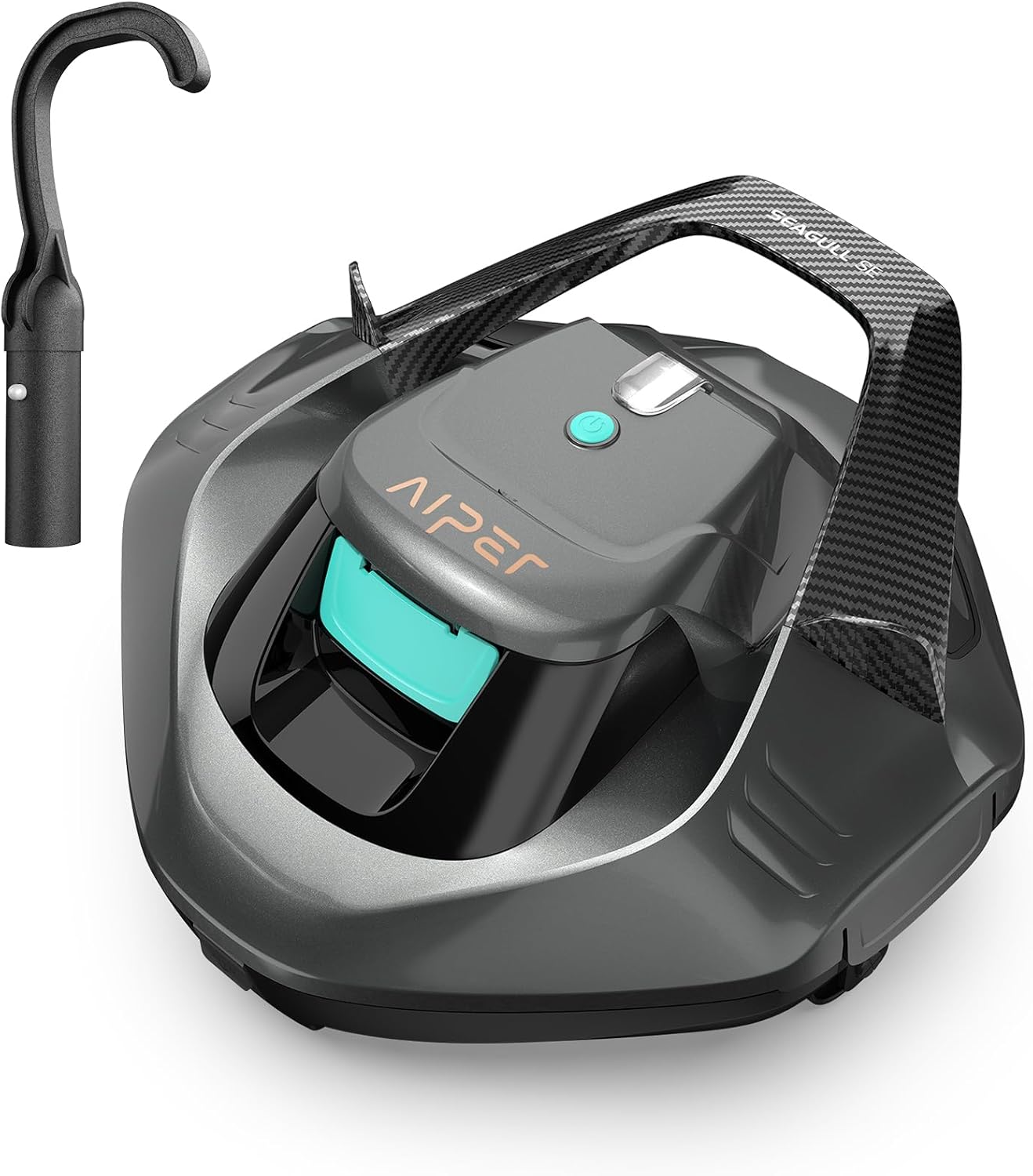
Aiper Seagull SE Cordless Pool Vacuum
Best for: Budget-minded owners of flat-bottom above-ground pools
Frequently asked questions
Are cordless pool robots as powerful as corded models?
Some are capable cleaners, but power cannot be inferred from the absence of a cord. Compare the intended pool size, brush system, filtration, cycle design, and verified surface coverage for the exact model.
Can a corded robot stay in the pool?
Follow the manufacturer’s storage guidance. Continuous submersion can expose the cable, seals, and housing to chemicals and weather, even when a unit is designed to operate underwater.
Which type is easier for occasional use?
Cordless is often quicker to deploy if it is charged. Corded may be more dependable after long storage because there is no traction battery to recharge, although setup takes longer.
Final decision
Match the answer above to the exact model manual, pool measurements and maintenance routine. Amazon listings can change by seller, bundle and generation, so verify the product name and ASIN before relying on a feature.