Plumbing and booster-pump questions
Some pressure-side cleaners work from a return line, while others depend on a dedicated line and booster pump. That distinction can change installation cost and energy use. A robot avoids pool-side plumbing changes but still needs safe charging or power arrangements.
Debris bags and filter baskets
Pressure units commonly collect leaves and larger material in a bag that can be emptied without opening the pool filter. Robots use rigid baskets or panels, with mesh choices that may favor coarse or fine material. Compare capacity and rinse access for the debris your yard produces.
Scrubbing behavior
A pressure cleaner is often valued for sweeping and collecting, not for applying powered brush contact across every surface. Many robots actively brush as they drive. That does not eliminate manual brushing, especially around steps, ledges, fittings, and areas the machine cannot reach.
Timing and circulation
Pressure-side operation is tied to pump flow and may be scheduled with the circulation system. A robot can run during a separate window, concentrating captured debris in its own filter. Owners should still maintain normal circulation and chemical balance regardless of cleaner type.
Service and storage
Pressure systems have hoses, backup valves, wheels, bags, and water-management parts that wear. Robots add sealed motors, tracks, control electronics, and possibly a battery. Before buying, check parts availability, lifting weight, storage space, and whether nearby service supports the selected model.
Use the robotic pool cleaner decision framework to compare the broader category, or narrow the catalog through Robotic Pool Cleaners for In-Ground Pools.
Exact products to compare
As an Amazon Associate, we may earn from qualifying purchases.

Dolphin Nautilus CC Automatic Robotic Pool Cleaner
Best for: Owners who want a compact established corded cleaner
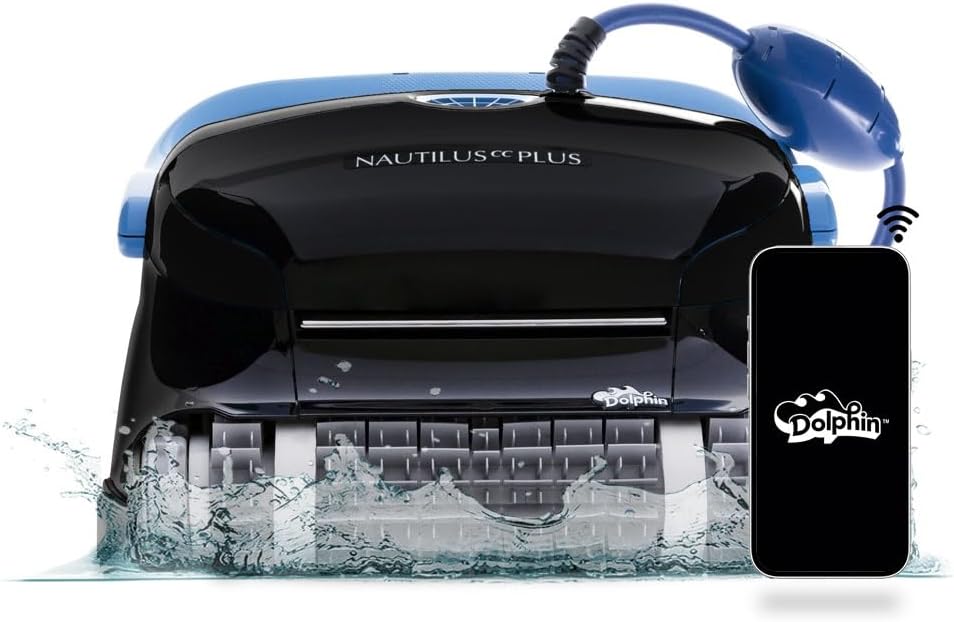
Dolphin Nautilus CC Plus Robotic Pool Cleaner
Best for: Buyers comparing a widely searched midrange Dolphin

Dolphin Nautilus CC Supreme Wi-Fi Robotic Pool Cleaner
Best for: Large pools needing broader cleaning-zone coverage
Frequently asked questions
Do all pressure-side cleaners need a booster pump?
No. Some are designed for standard return pressure, while others specify a booster system. Confirm the exact cleaner and the pool’s plumbing before ordering.
Which option handles acorns and leaves better?
Both can work if intake openings and containers are appropriately sized. A large pressure bag or coarse robotic basket is usually preferable to a fine filter for bulky yard debris.
Can either cleaner scrub the waterline?
Certain robots are designed for wall and waterline coverage. Pressure-side coverage varies, and buyers should not assume waterline scrubbing without an explicit model claim.
Final decision
Match the answer above to the exact model manual, pool measurements and maintenance routine. Amazon listings can change by seller, bundle and generation, so verify the product name and ASIN before relying on a feature.