Start with written compatibility
Do not infer vinyl safety from a product photo or a broad claim that lists all pools. The exact manual should identify suitable surfaces and any brush or mode restrictions. Different models in one family may use different drive parts or climbing behavior.
Inspect the liner first
Look for tears, bubbles, wrinkles, lifted seams, aging patches, and exposed fasteners. A robot can reveal an existing weakness without being its original cause. Address questionable areas with a qualified pool professional before adding repeated mechanical contact.
Remove damaging debris manually
Metal fragments, sharp stones, broken plastic, and stiff twigs can become trapped under a wheel, track, or brush. Skim or retrieve them first. The cleaner is meant for ordinary pool debris, not objects that could be dragged across a soft surface.
Observe drains and coves
Raised drains and steep wall-to-floor curves can change how a robot loads its edge or pivots. Watch a full first cycle and inspect the same areas afterward. A model that frequently gets stuck can create repeated rubbing even if its materials are normally liner-safe.
Use gentle handling outside the pool
Do not drop the unit onto the liner or pull it across a shallow step by its cable. Lower and retrieve it using the approved handle method, allow it to drain, and inspect tracks and brushes for embedded grit before the next launch.
Use the robotic pool cleaner decision framework to compare the broader category, or narrow the catalog through Robotic Pool Cleaners for In-Ground Pools.
Exact products to compare
As an Amazon Associate, we may earn from qualifying purchases.

Dolphin Nautilus CC Automatic Robotic Pool Cleaner
Best for: Owners who want a compact established corded cleaner
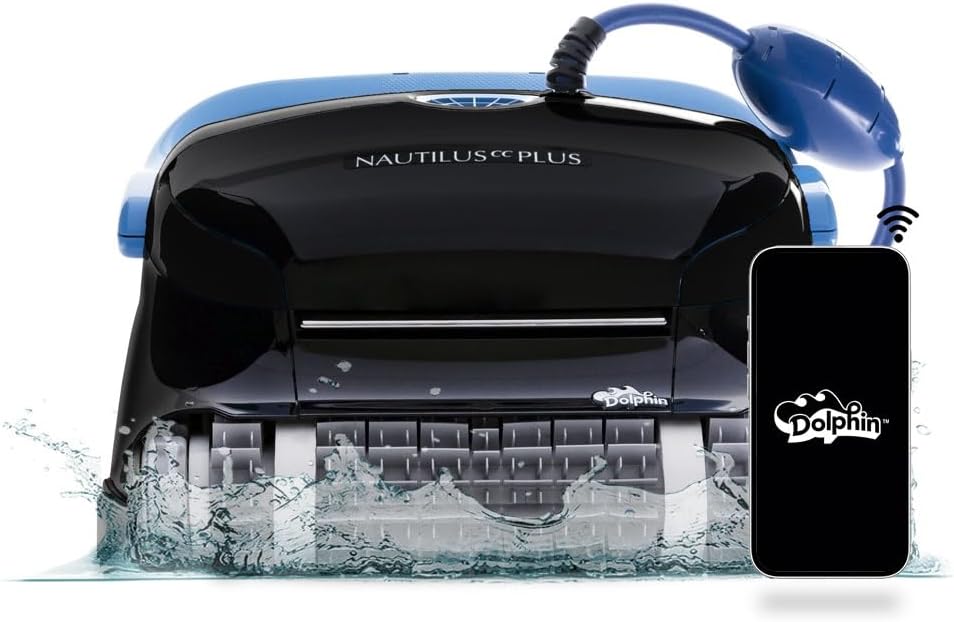
Dolphin Nautilus CC Plus Robotic Pool Cleaner
Best for: Buyers comparing a widely searched midrange Dolphin

Dolphin Nautilus CC Supreme Wi-Fi Robotic Pool Cleaner
Best for: Large pools needing broader cleaning-zone coverage
Frequently asked questions
Can a wall-climbing robot be used on vinyl?
Only when the exact model and mode are approved for vinyl and the liner is in sound condition.
Will a robot damage liner seams?
A compatible unit should not harm sound seams, but loose or aging seams require inspection and professional advice.
What should I check after the first cycle?
Inspect seams, patches, drains, coves, and any area where the robot stalled or changed direction repeatedly.
Final decision
Match the answer above to the exact model manual, pool measurements and maintenance routine. Amazon listings can change by seller, bundle and generation, so verify the product name and ASIN before relying on a feature.