Separate killing algae from collecting it
Sanitizer and balanced water address living algae. A robot mainly scrubs surfaces and captures particles. Sending it into an untreated bloom may load the filter quickly while leaving the underlying chemistry unchanged, so confirm chlorine, pH, and circulation before judging cleaning performance.
Match filtration to the residue
Dead algae can be much finer than leaves or insects. Some models offer fine or ultra-fine cartridges, while others use a general-purpose basket. Check the exact filter rating and compatible accessories; a machine that excels with leaves may pass very fine dust back into the water.
Expect several short cycles
A severe cleanup can overwhelm even a large basket. Run a normal cycle, inspect the water flow and filter, rinse thoroughly, and repeat if the pool-care plan calls for it. Repeated clean filters usually outperform one long cycle with restricted flow.
Brush areas the robot misses
Steps, tight corners, ladders, drains, and the waterline may receive uneven coverage. Manually brush those locations toward open floor areas where the robot can collect debris. Coverage claims vary by model and pool geometry, so watch an early cycle rather than assuming every surface is reached.
Protect the machine after treatment
Concentrated chemicals can be hard on seals, plastics, and metals. Follow the cleaner manual and chemical label before operating after shock treatment. Rinse the robot with fresh water, clean the filter, and allow the unit to dry out of direct sun after a contaminated cleanup.
Use the robotic pool cleaner decision framework to compare the broader category, or narrow the catalog through Robotic Pool Cleaners for In-Ground Pools.
Exact products to compare
As an Amazon Associate, we may earn from qualifying purchases.

Dolphin Nautilus CC Automatic Robotic Pool Cleaner
Best for: Owners who want a compact established corded cleaner
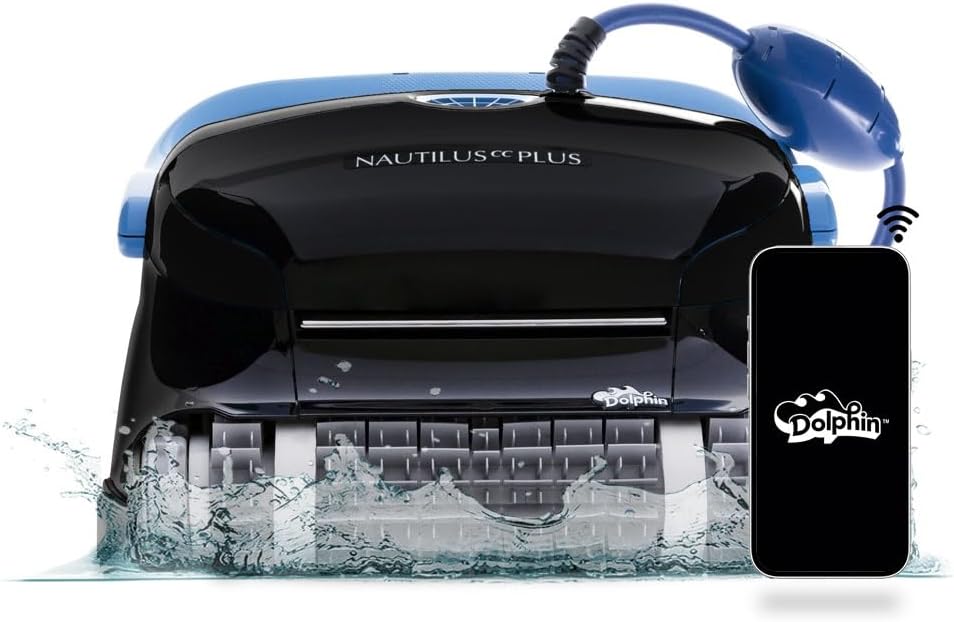
Dolphin Nautilus CC Plus Robotic Pool Cleaner
Best for: Buyers comparing a widely searched midrange Dolphin

Dolphin Nautilus CC Supreme Wi-Fi Robotic Pool Cleaner
Best for: Large pools needing broader cleaning-zone coverage
Frequently asked questions
Will a robot cure a green pool?
No. It can assist with brushing and debris recovery, but sanitation, filtration, circulation, and water balance resolve the bloom.
Which filter should I use for dead algae?
Use the finest filter approved for the exact model, while monitoring flow and cleaning it more often.
Can I run the robot immediately after adding shock?
Only if the chemical instructions and robot manual permit it after the water returns to an acceptable range.
Final decision
Match the answer above to the exact model manual, pool measurements and maintenance routine. Amazon listings can change by seller, bundle and generation, so verify the product name and ASIN before relying on a feature.