Random-looking movement can still be programmed
A cleaner that appears to wander may use timed direction changes to achieve coverage over a full cycle. That approach can work in simple rectangles. The drawback is that short observation periods can show repeated tracks even when the broader pattern eventually reaches more area.
Sensors need a compatible environment
Gyroscopes, water-flow measurements, obstacle detection, and other sensors can improve route decisions, but drains, slopes, ledges, and changing traction still affect movement. A map cannot make a floor-only machine clean a wall or cross a feature it cannot physically navigate.
Mapping can mean several things
One app may show a true route or pool outline, while another displays status or an estimated pattern. Determine whether the user can select zones, exclude areas, or simply view information. A visual map has limited value if it offers no useful control.
Coverage should be judged over complete cycles
A robot may intentionally revisit sections to scrub or approach walls from different angles. Look for missed debris after the specified cycle rather than demanding perfectly parallel lines. Repeated gaps in the same area may indicate geometry, traction, or setup problems.
Good navigation cannot overcome poor maintenance
Packed filters, worn brushes, tangled cables, blocked intakes, or weak batteries can shorten routes and reduce climbing. Keep the machine in operating condition before attributing every missed area to software. Manual brushing remains necessary around inaccessible details.
Use the robotic pool cleaner decision framework to compare the broader category, or narrow the catalog through Robotic Pool Cleaners for In-Ground Pools.
Exact products to compare
As an Amazon Associate, we may earn from qualifying purchases.

Dolphin Nautilus CC Automatic Robotic Pool Cleaner
Best for: Owners who want a compact established corded cleaner
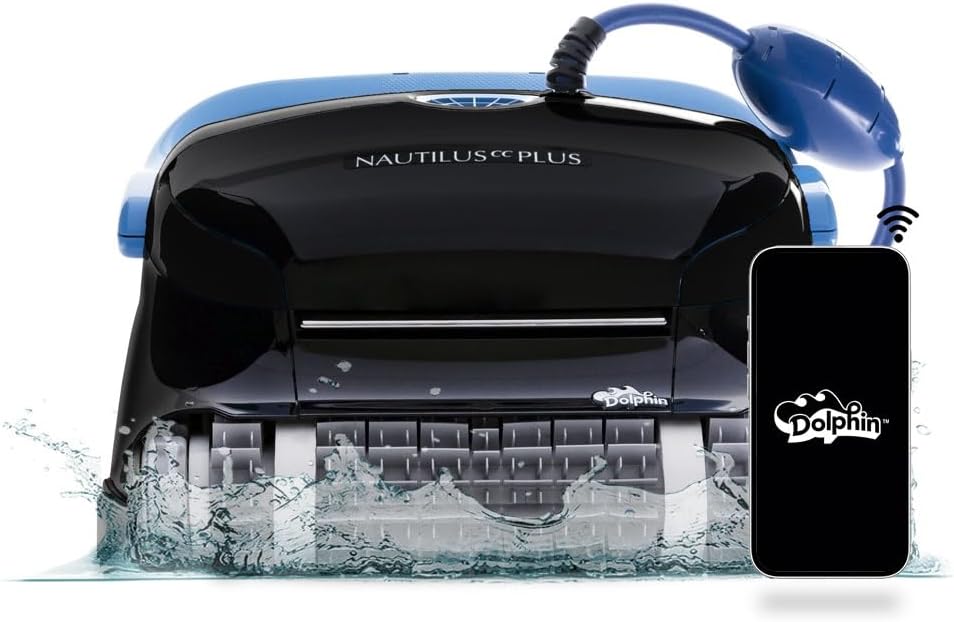
Dolphin Nautilus CC Plus Robotic Pool Cleaner
Best for: Buyers comparing a widely searched midrange Dolphin

Dolphin Nautilus CC Supreme Wi-Fi Robotic Pool Cleaner
Best for: Large pools needing broader cleaning-zone coverage
Frequently asked questions
Do robotic pool cleaners memorize the pool?
Some may build or display route information, while others calculate movement during each cycle. Do not assume permanent memory unless the exact model documents it.
Are straight cleaning lines always better?
They can indicate structured navigation, but effective brush contact and full coverage matter more than visual neatness.
Can mapping exclude a shallow ledge?
Only certain systems offer user-defined zones, and underwater positioning has constraints. Verify this function for the exact model rather than relying on general smart-navigation language.
Final decision
Match the answer above to the exact model manual, pool measurements and maintenance routine. Amazon listings can change by seller, bundle and generation, so verify the product name and ASIN before relying on a feature.