Leaves demand opening size and volume
A large basket is helpful only if leaves can pass through the intake without bridging. Wet leaf mats can reduce water flow before the container appears full. During heavy drops, collect the bulk first or pause to empty the robot rather than forcing one overloaded cycle.
Sand is heavier than suspended dust
Sand settles and can be picked up when brushes direct it toward the intake, but filter seams and mesh determine retention. Check the basket after a cycle and observe whether grains return near the outlet. Worn seals or an improperly seated panel can undermine fine capture.
Silt and pollen challenge fine media
Very small material may require finer panels or bags, and these can load rapidly. Reduced flow then weakens pickup and climbing. Rinsing during dusty periods is part of the process; adding the finest filter is not automatically better for every full cycle.
Mixed debris favors stages
Pools under trees may contain twigs, leaves, insects, grit, and fine organic residue at once. A coarse prefilter or dual-layer system can protect fine media. Interchangeable baskets also work when owners choose the filter according to the current cleanup.
Filtration is not water treatment
A robot removes captured physical debris, but it does not replace circulation, sanitizer, or the main pool filter. Cloudy water can have chemical or microscopic causes beyond the robot’s media. Diagnose water balance rather than expecting repeated robotic cycles to solve every clarity issue.
Use the robotic pool cleaner decision framework to compare the broader category, or narrow the catalog through Robotic Pool Cleaners for In-Ground Pools.
Exact products to compare
As an Amazon Associate, we may earn from qualifying purchases.

Dolphin Nautilus CC Automatic Robotic Pool Cleaner
Best for: Owners who want a compact established corded cleaner
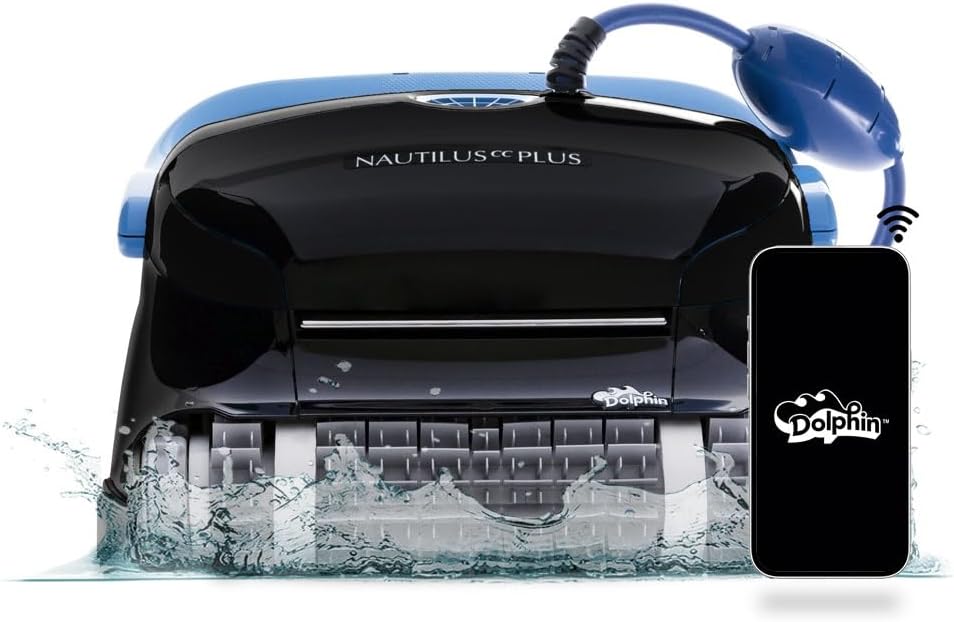
Dolphin Nautilus CC Plus Robotic Pool Cleaner
Best for: Buyers comparing a widely searched midrange Dolphin

Dolphin Nautilus CC Supreme Wi-Fi Robotic Pool Cleaner
Best for: Large pools needing broader cleaning-zone coverage
Frequently asked questions
What micron filter does a pool robot need?
There is no universal number. Verify the model’s available media and choose according to particle type while preserving enough flow for effective movement.
Why does dirt appear after the robot stops?
A full filter, poor seal, lifted basket, or fine material passing through can release debris. Some sediment may also be stirred from inaccessible areas.
Should I use the finest filter all season?
Not necessarily. Coarser media can handle leaf volume with less flow restriction, while fine media is better reserved for dust and finishing passes.
Final decision
Match the answer above to the exact model manual, pool measurements and maintenance routine. Amazon listings can change by seller, bundle and generation, so verify the product name and ASIN before relying on a feature.