Verify the startup conditions
Some cleaners will not start in air or very shallow water. Check minimum depth, water temperature, selected cycle, lid closure, filter seating, and any transport or safety lock. App connection may not remain available after the robot is underwater.
Check the power path
Test and reset the GFCI only as instructed, and note supply lights or error codes. Try only outlets and reset procedures allowed by the manual. Do not use an extension cord, bypass a safety device, or open a power supply.
Clear the drive system
With power removed, look for hair, string, small stones, leaves, or toys around tracks, axles, brushes, and accessible gears. Rotate components only if the manual instructs it. Resistance may be normal; forcing them can create additional damage.
Restore water flow
A packed filter or blocked intake can alter movement, and debris at the impeller can stop operation. Clean the filter and user-accessible water path. Keep fingers and tools away until the robot is de-energized, and never open a sealed motor unit.
Know when to stop
Repeated faults, burning smells, swelling, water inside a sealed area, damaged insulation, melted connectors, or a failing GFCI require immediate shutdown. Record the code and contact authorized support rather than cycling the power repeatedly.
Use the robotic pool cleaner decision framework to compare the broader category, or narrow the catalog through Robotic Pool Cleaners for In-Ground Pools.
Exact products to compare
As an Amazon Associate, we may earn from qualifying purchases.

Dolphin Nautilus CC Automatic Robotic Pool Cleaner
Best for: Owners who want a compact established corded cleaner
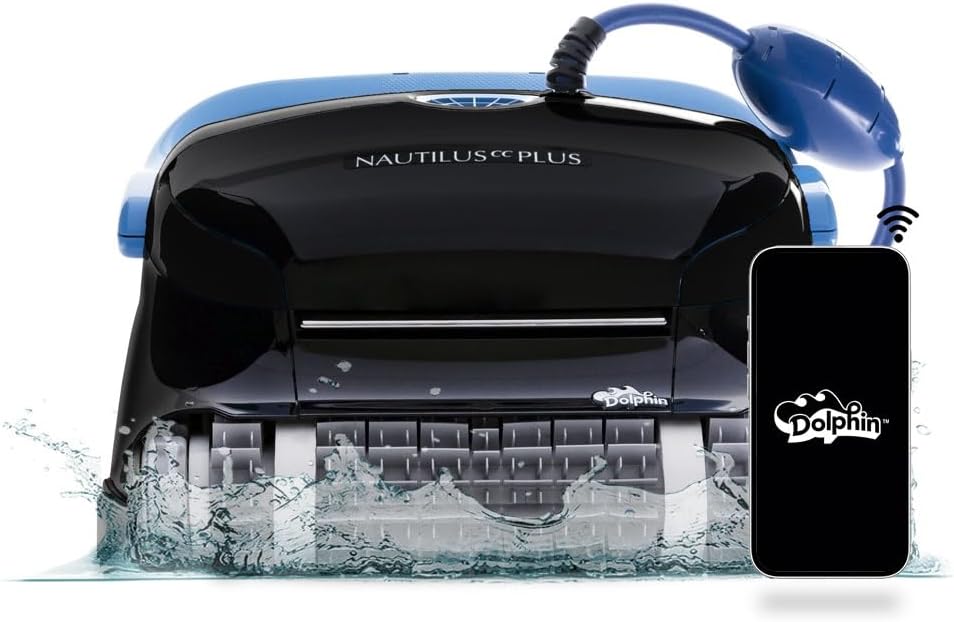
Dolphin Nautilus CC Plus Robotic Pool Cleaner
Best for: Buyers comparing a widely searched midrange Dolphin

Dolphin Nautilus CC Supreme Wi-Fi Robotic Pool Cleaner
Best for: Large pools needing broader cleaning-zone coverage
Frequently asked questions
Why does the robot hum but not move?
The impeller may run while the drive is obstructed, or the reverse may be true. Disconnect power and inspect accessible brushes, tracks, wheels, intake, and filter.
Can low water temperature stop movement?
Some models have an operating temperature range, and cold water can affect traction or battery performance. Check the exact manual rather than using a generic threshold.
Should I push the robot to start it?
No. A healthy cleaner should begin according to its startup sequence. Pushing can mask a jam or fault and place hands near moving parts.
Final decision
Match the answer above to the exact model manual, pool measurements and maintenance routine. Amazon listings can change by seller, bundle and generation, so verify the product name and ASIN before relying on a feature.