Verify wall-cleaning capability
Product families often include floor-only and wall-capable versions with similar names. Check the model label and manual, not the appearance. Waterline scrubbing is another separate feature; a robot may climb walls without spending time at the tile line.
Restore water flow
Clean the filter, outlet screens, intake, and user-accessible impeller area. Restricted flow can let the machine drive on the floor while failing on a vertical surface. Reinstall the basket and covers fully so water cannot bypass the designed path.
Restore traction
Inspect brushes, climbing rings, tracks, and wheels for wear, glazing, looseness, or debris. Confirm the brush type is approved for the finish. Replace worn parts in matched sets when the manufacturer directs, rather than roughening them or adding homemade material.
Check the pool conditions
Algae film, imbalanced water, or incompatible temperature can make walls slippery and affect materials. Correct chemistry before retesting. Do not use the robot as the treatment for a slick active bloom; sanitize and brush the pool through established care steps.
Account for geometry
A machine needs a usable transition from floor to wall. Steps, benches, safety ledges, steep seams, unusual coves, and protruding fittings can break the route. Manually brush inaccessible areas toward the floor and evaluate coverage over a complete cycle.
Use the robotic pool cleaner decision framework to compare the broader category, or narrow the catalog through Robotic Pool Cleaners for In-Ground Pools.
Exact products to compare
As an Amazon Associate, we may earn from qualifying purchases.

Dolphin Nautilus CC Automatic Robotic Pool Cleaner
Best for: Owners who want a compact established corded cleaner
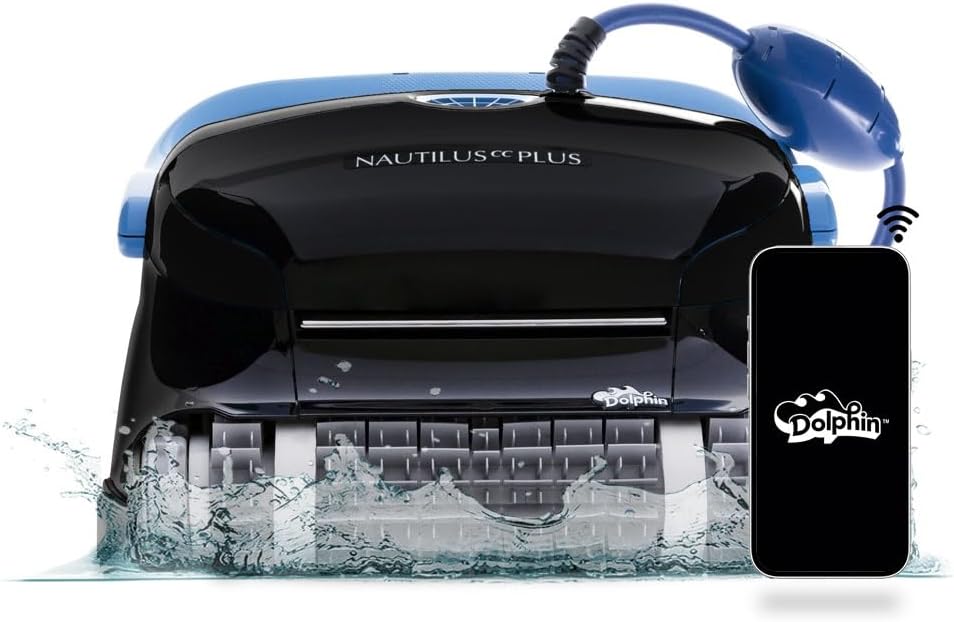
Dolphin Nautilus CC Plus Robotic Pool Cleaner
Best for: Buyers comparing a widely searched midrange Dolphin

Dolphin Nautilus CC Supreme Wi-Fi Robotic Pool Cleaner
Best for: Large pools needing broader cleaning-zone coverage
Frequently asked questions
Why does the robot climb halfway and fall?
Restricted flow, worn traction parts, a slippery wall, or unsuitable brush material are common checks. Some models also reverse intentionally as part of their route.
Will every wall-climbing robot clean the waterline?
No. Wall climbing and waterline scrubbing are distinct specifications. Verify the cleaning zones and cycle mode for the exact model.
Can I add weight to make it climb?
No. Unapproved weight changes buoyancy, motor load, navigation, and safety. Correct the documented cause or contact the manufacturer.
Final decision
Match the answer above to the exact model manual, pool measurements and maintenance routine. Amazon listings can change by seller, bundle and generation, so verify the product name and ASIN before relying on a feature.