Test instead of watching the clock
Shock products, doses, sunlight, temperature, stabilizer, and pool volume all affect how quickly chlorine changes. A generic overnight rule may be wrong. Measure the required parameters with a suitable test and compare them with the robot manual.
Let concentrated treatment disperse
Granules and locally concentrated liquid can settle or pass across the floor before full mixing. Use the pool's circulation and brushing procedure rather than using the robot to distribute chemicals. Never pour treatment onto or near the cleaner.
Plan the cleanup sequence
For an algae treatment, brushing may loosen material before the robot is safe to run. Once chemistry permits, use an appropriate fine filter and inspect it frequently. The pool's main filtration system remains part of the cleanup rather than being replaced by the robot.
Rinse after a demanding cycle
Retrieve the cleaner by the approved method and rinse accessible surfaces and the filter with fresh water. Inspect seals, cable jackets, contacts, and brushes for residue or unusual changes. Do not open sealed motor areas or apply chemicals to the robot.
Keep people and equipment rules separate
A pool may meet one threshold for swimming but still fall outside an equipment maker's recommendation, or vice versa. Check both sets of instructions independently. Removing swimmers does not automatically make high-chlorine water safe for the cleaner.
Use the robotic pool cleaner decision framework to compare the broader category, or narrow the catalog through Robotic Pool Cleaners for In-Ground Pools.
Exact products to compare
As an Amazon Associate, we may earn from qualifying purchases.

Dolphin Nautilus CC Automatic Robotic Pool Cleaner
Best for: Owners who want a compact established corded cleaner
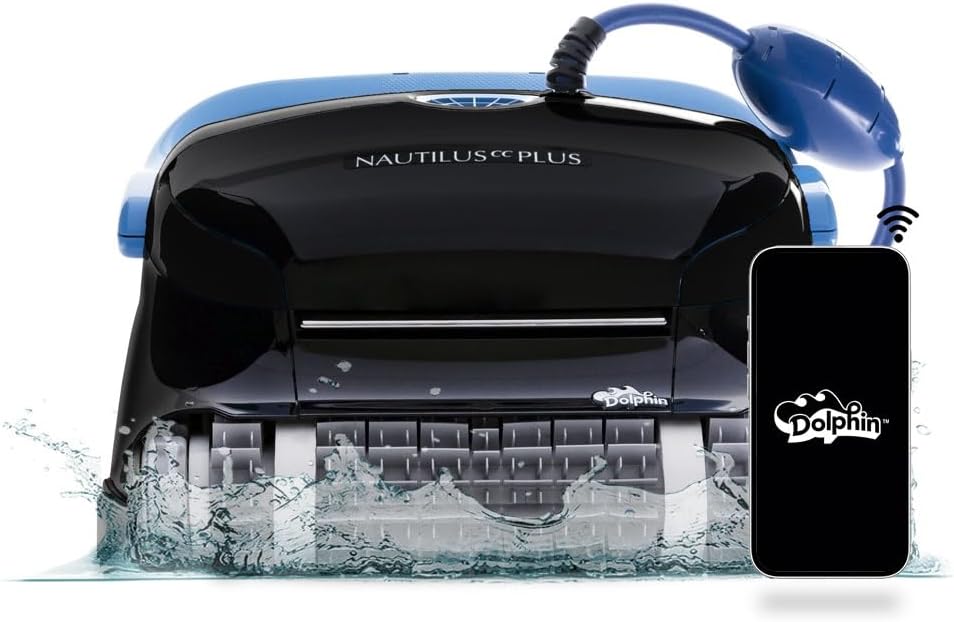
Dolphin Nautilus CC Plus Robotic Pool Cleaner
Best for: Buyers comparing a widely searched midrange Dolphin

Dolphin Nautilus CC Supreme Wi-Fi Robotic Pool Cleaner
Best for: Large pools needing broader cleaning-zone coverage
Frequently asked questions
Is twenty-four hours always long enough?
No. Waiting time depends on treatment and measured chemistry; test the water and follow both manuals.
Can the robot mix pool shock?
No. Use the prescribed circulation and brushing method, keeping the cleaner away from concentrated chemicals.
Should I use a fine filter after algae treatment?
If approved for the model, a fine filter can help collect residue once the water is safe for operation.
Final decision
Match the answer above to the exact model manual, pool measurements and maintenance routine. Amazon listings can change by seller, bundle and generation, so verify the product name and ASIN before relying on a feature.