Treat traction as a primary feature
A cleaner must maintain contact while turning and climbing a smooth shell. Brush material, track condition and water flow all influence grip. A model that climbs plaster successfully may behave differently on fiberglass, so look for surface-specific documentation and owner reports from similar pools.
Map molded features
Record the size and depth of steps, benches, seats and ledges. Wide submerged steps may be reachable, but shallow shelves often cause the unit to lose buoyancy control or expose part of its intake. No navigation system should be assumed to cover every molded contour.
Protect the gelcoat
Use only approved brushes and keep wheels, tracks and intake edges free of trapped grit. Avoid dragging the cleaner across the shell. A dull finish, crack or blister is a pool-surface issue that should be assessed before repeated mechanical cleaning.
Match filtration to fine material
Smooth shells make settled sand and pollen visible. A coarse basket may collect leaves while returning fine material to the water. Look for an appropriate fine filter or interchangeable media, and clean it before restricted flow reduces pickup or wall traction.
Test an initial cycle under supervision
Watch how the cleaner crosses the main drain, changes slope and approaches steps. Repeated stalls, hard impacts or wheel spin indicate a mismatch or setup problem. Adjust the start point and mode only within the manual's instructions; do not add improvised weights or traction devices.
Use the robotic pool cleaner decision framework to compare the broader category, or narrow the catalog through Robotic Pool Cleaners for In-Ground Pools.
Exact products to compare
As an Amazon Associate, we may earn from qualifying purchases.

Dolphin Nautilus CC Automatic Robotic Pool Cleaner
Best for: Owners who want a compact established corded cleaner
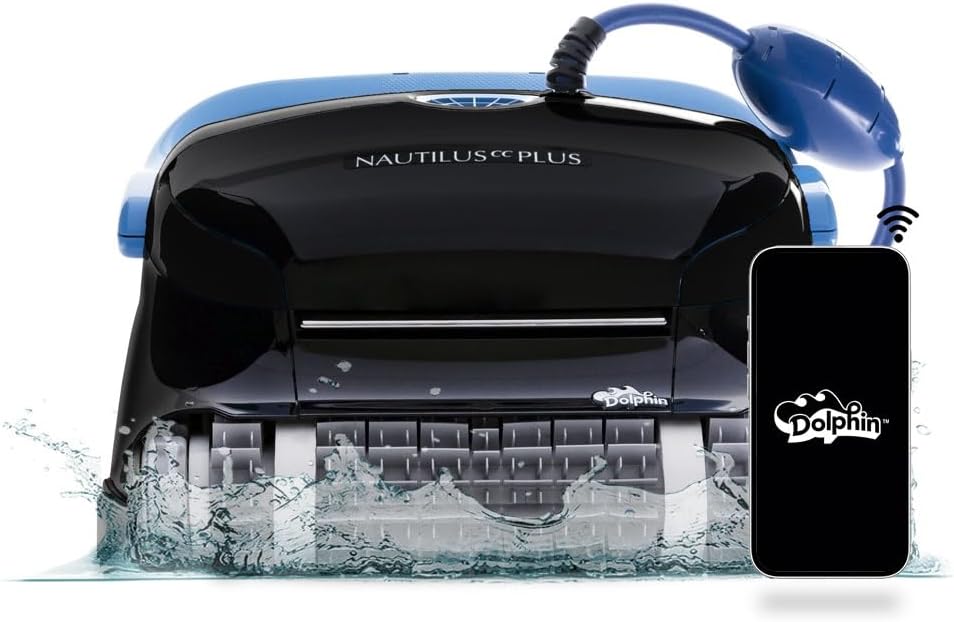
Dolphin Nautilus CC Plus Robotic Pool Cleaner
Best for: Buyers comparing a widely searched midrange Dolphin

Dolphin Nautilus CC Supreme Wi-Fi Robotic Pool Cleaner
Best for: Large pools needing broader cleaning-zone coverage
Frequently asked questions
Do all pool robots work on fiberglass?
No. Confirm fiberglass compatibility in current manufacturer documentation. Smooth surfaces can require different brush or track behavior.
Can a pool robot scratch fiberglass?
A compatible cleaner should be finish-safe, but trapped grit or damaged parts can mark a surface. Inspect and rinse the unit regularly.
Will it clean fiberglass steps?
It may reach broad submerged steps, but shallow or narrow molded features often require manual brushing and vacuuming.
Final decision
Match the answer above to the exact model manual, pool measurements and maintenance routine. Amazon listings can change by seller, bundle and generation, so verify the product name and ASIN before relying on a feature.