Timing determines the advantage
Surface collection is preventive: capturing a leaf early can keep it from staining, breaking down, or reaching the pump basket. Floor cleaning is corrective after material settles. Observe the pool at several times of day to identify where debris spends most of its time.
The cleaning mechanisms are not interchangeable
A floating skimmer cannot scrub the deep end, and a submerged robot may not collect a fresh layer of insects at the surface. Waterline-capable floor robots still work against walls rather than roaming the open surface. Product names should not blur these roles.
Wind and circulation shape surface results
A skimmer has to work against wind patterns, returns, and obstacles such as ladders. It may concentrate where debris already travels or struggle in a trapped corner. A floor robot faces drains, slopes, steps, and objects instead, so each requires different pool compatibility.
Containers fill with different material
Surface baskets can collect bulky dry leaves quickly, while floor baskets hold waterlogged debris, grit, and fine dirt. Capacity comparisons should consider material density and ease of emptying. Fine pollen may need appropriate mesh in either device.
Coordinate instead of creating collisions
If both devices operate, follow their manufacturers’ guidance and watch the first sessions. A surface unit, floating cord, and hoses can interact near walls. It may be simpler to skim first, remove the device, and then run a floor cycle after remaining debris settles.
Use the robotic pool cleaner decision framework to compare the broader category, or narrow the catalog through Robotic Pool Cleaners for In-Ground Pools.
Exact products to compare
As an Amazon Associate, we may earn from qualifying purchases.

Dolphin Nautilus CC Automatic Robotic Pool Cleaner
Best for: Owners who want a compact established corded cleaner
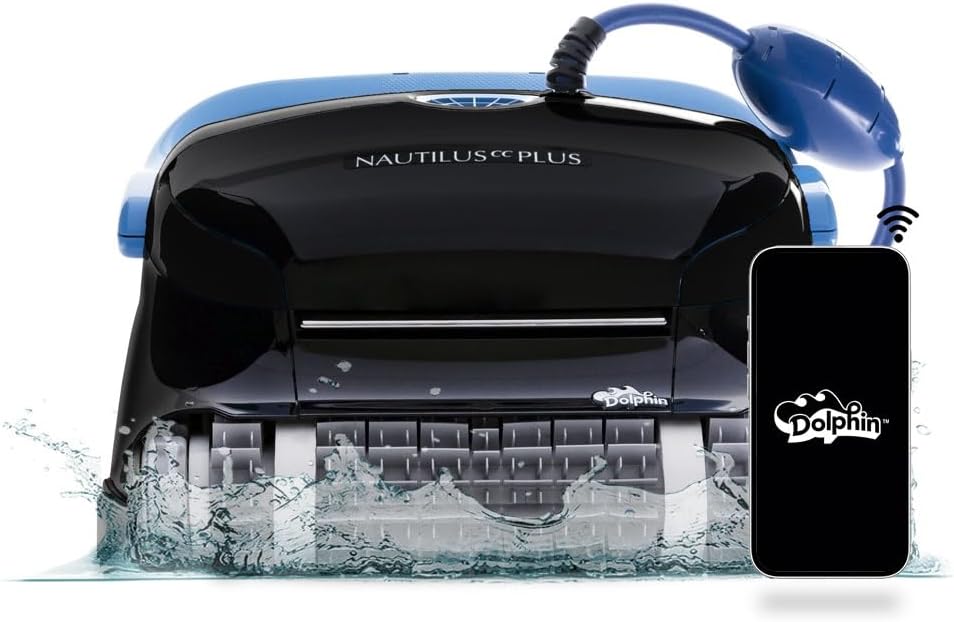
Dolphin Nautilus CC Plus Robotic Pool Cleaner
Best for: Buyers comparing a widely searched midrange Dolphin

Dolphin Nautilus CC Supreme Wi-Fi Robotic Pool Cleaner
Best for: Large pools needing broader cleaning-zone coverage
Frequently asked questions
Can a robotic skimmer replace the built-in pool skimmer?
It can supplement surface collection, but it does not replace the circulation, plumbing, and filtration functions of the pool system.
Will a floor robot pick up floating leaves?
It primarily collects submerged debris. Some leaves may sink during the cycle, but open-surface collection is not its core job.
Which should I buy first?
Choose based on the dominant daily problem. Constant windblown leaves favor surface interception; settled grit and wall buildup favor a submerged cleaner.
Final decision
Match the answer above to the exact model manual, pool measurements and maintenance routine. Amazon listings can change by seller, bundle and generation, so verify the product name and ASIN before relying on a feature.