Release trapped air
Lower the robot in the orientation shown by the manufacturer, gently rotate it only if instructed, and wait for bubbles to stop before releasing it. Throwing the unit into the water can trap air and strain the cable or handle. Never stand in the pool to position powered equipment.
Check assembly and water paths
A filter basket installed backward, an open latch, or debris blocking an outlet can disturb balance and flow. Remove the cleaner, isolate power, rinse accessible passages, and reseat every panel. Do not drill vents or remove factory flotation pieces.
Address slippery conditions
Algae and biofilm can defeat otherwise healthy tracks and brushes, especially on walls. Restore safe water balance and brush the pool manually before retesting. Avoid using the robot as the only response to an active algae problem, because loaded filters and slick surfaces can mask its normal ability.
Inspect wear items
Compare track tension, wheel tread, foam rings, and brushes with the manual’s illustrations. Some brush materials must be thoroughly saturated before they grip correctly. Replace only with parts listed for the exact model and install them without opening a sealed motor section.
Separate buoyancy from propulsion faults
If the robot sits flat but one side does not drive, propulsion may need service. If it repeatedly rises after air is expelled, record the behavior and stop. Unusual buoyancy can indicate a displaced internal component, damaged seal, or other condition unsuitable for continued underwater operation.
Use the robotic pool cleaner decision framework to compare the broader category, or narrow the catalog through Robotic Pool Cleaners for In-Ground Pools.
Exact products to compare
As an Amazon Associate, we may earn from qualifying purchases.

Dolphin Nautilus CC Automatic Robotic Pool Cleaner
Best for: Owners who want a compact established corded cleaner
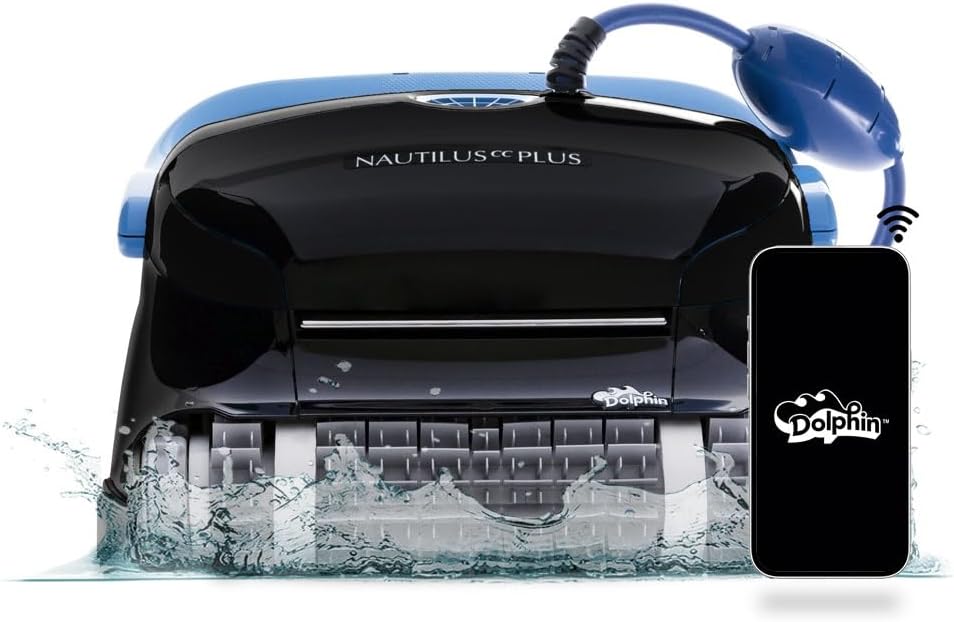
Dolphin Nautilus CC Plus Robotic Pool Cleaner
Best for: Buyers comparing a widely searched midrange Dolphin

Dolphin Nautilus CC Supreme Wi-Fi Robotic Pool Cleaner
Best for: Large pools needing broader cleaning-zone coverage
Frequently asked questions
Why does the robot lift off the floor near a return jet?
Strong circulation can redirect a light or slow-moving cleaner. Follow guidance on operating the pool pump during robotic cycles.
Can I add weight to keep it down?
No. Added weight changes motor load and safety characteristics and can damage surfaces or the cleaner.
Why will it drive on the floor but not climb?
Wall climbing demands more traction and flow. Slick walls, full filters, worn brushes, or a model not intended to climb are common explanations.
Final decision
Match the answer above to the exact model manual, pool measurements and maintenance routine. Amazon listings can change by seller, bundle and generation, so verify the product name and ASIN before relying on a feature.