Use and test GFCI protection
Ground-fault protection is a critical layer against shock around pools. Follow safety-authority and device instructions for testing; portable or cord-connected protection may require checks before use. If it fails to test or reset, keep the cleaner disconnected and call a qualified electrician.
Keep people out
Do not swim while any robotic cleaner is operating. Remove the unit and its cable or retrieval line before pool use. A cordless design eliminates a floating power cable, not moving-part, collision, battery, or underwater-obstacle hazards.
Protect every connection
Make connections with dry hands in a dry area and keep plugs off wet ground. Do not carry a power supply by its cord, lift the robot by its cable, tape over damaged insulation, or open sealed electrical housings. Replace damaged approved components.
Charge cordless units correctly
Charge only out of the pool with contacts dry and the robot positioned as specified. Maintain ventilation and the allowed ambient temperature. Do not cover the charger, use a third-party adapter, or leave a suspect battery charging unattended.
Recognize emergency conditions
If anyone feels tingling in or near the pool, do not enter the water. Shut off power from a safe location, call emergency services, and follow trained nonconductive rescue procedures. During thunderstorms, keep swimmers out and discontinue electrical pool work.
Use the robotic pool cleaner decision framework to compare the broader category, or narrow the catalog through Robotic Pool Cleaners for In-Ground Pools.
Exact products to compare
As an Amazon Associate, we may earn from qualifying purchases.

Dolphin Nautilus CC Automatic Robotic Pool Cleaner
Best for: Owners who want a compact established corded cleaner
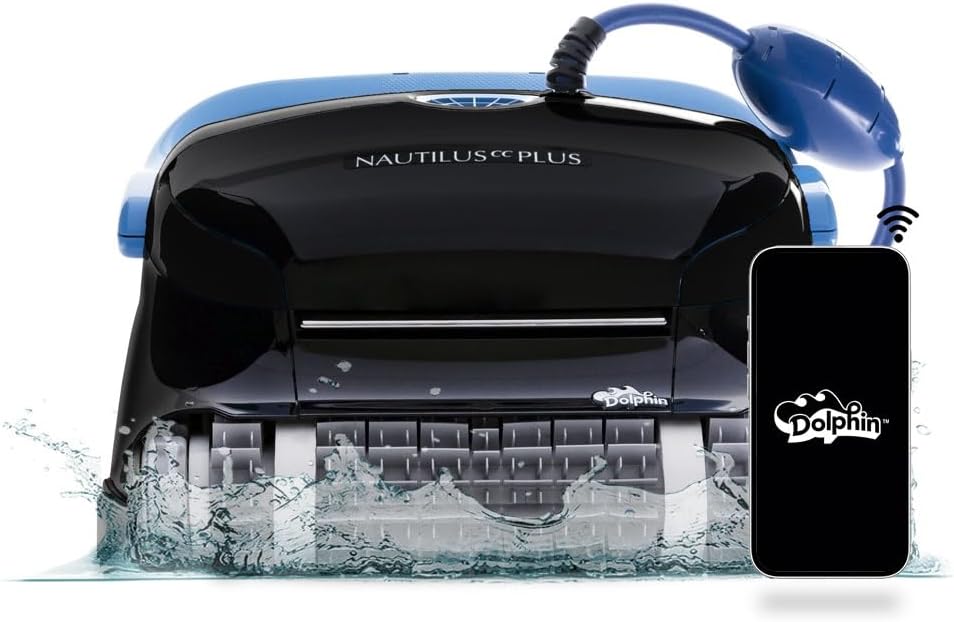
Dolphin Nautilus CC Plus Robotic Pool Cleaner
Best for: Buyers comparing a widely searched midrange Dolphin

Dolphin Nautilus CC Supreme Wi-Fi Robotic Pool Cleaner
Best for: Large pools needing broader cleaning-zone coverage
Frequently asked questions
Can I charge a cordless pool robot outdoors?
Only if the manual permits the location and conditions. Charging areas must be dry, stable, ventilated, within temperature limits, and protected from rain, spray, and standing water.
Can I use a different charger with the same plug?
No. Matching connector shape does not prove correct voltage, current, communication, or battery protection. Use only equipment approved for the exact model.
How do I check for recalls?
Find the model and serial label, then search the manufacturer's support site and the U.S. Consumer Product Safety Commission recall database. Follow the remedy exactly and stop use when directed.
Final decision
Match the answer above to the exact model manual, pool measurements and maintenance routine. Amazon listings can change by seller, bundle and generation, so verify the product name and ASIN before relying on a feature.