Length ratings are only a starting point
The longest dimension helps screen candidates, but total surface area, depth, walls, steps, and shape also matter. Match the manufacturer’s intended pool range and cleaning zones rather than assuming extra cable or runtime alone makes a smaller cleaner suitable.
Cord and battery limits appear differently
A corded unit needs enough working cable without an unsafe amount piled in the water. A cordless unit needs enough usable energy to cover the target area and climb as required. Cold water, debris load, and aging can reduce battery margin.
Capacity affects interruptions
Large pools collect more material and may require a bigger filter basket or an intermediate emptying. Small pools can overwhelm a compact robot too when a storm drops many leaves. Debris volume, not just gallons, should determine the preferred basket design.
Maneuverability matters in compact pools
Tight corners, short walls, benches, and closely spaced drains can redirect a long or powerful machine frequently. A smaller robot may be easier to place and retrieve, but it still needs a route suited to the floor transitions and surface material.
Human handling scales differently
Large-capacity machines can be heavier and retain more water when lifted. Small-pool owners may use a cleaner more often when it is light enough to deploy in minutes. Compare handle access, drainage speed, caddy options, storage footprint, and the path from pool to storage.
Use the robotic pool cleaner decision framework to compare the broader category, or narrow the catalog through Robotic Pool Cleaners for In-Ground Pools.
Exact products to compare
As an Amazon Associate, we may earn from qualifying purchases.

Dolphin Nautilus CC Automatic Robotic Pool Cleaner
Best for: Owners who want a compact established corded cleaner
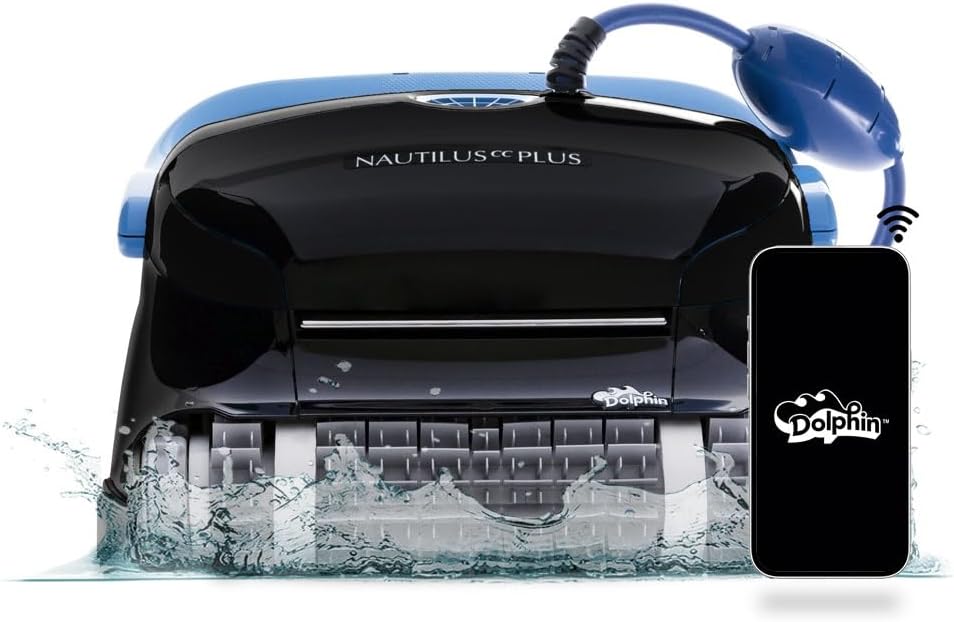
Dolphin Nautilus CC Plus Robotic Pool Cleaner
Best for: Buyers comparing a widely searched midrange Dolphin

Dolphin Nautilus CC Supreme Wi-Fi Robotic Pool Cleaner
Best for: Large pools needing broader cleaning-zone coverage
Frequently asked questions
Can I use a large-pool robot in a small pool?
Often it can operate, but suitability depends on minimum depth, turning room, slopes, and surface compatibility. Extra capacity may not justify added size and cost.
What happens if a robot is rated for a shorter pool?
A cord may not reach safely or a battery may end before adequate coverage. Do not extend power equipment or exceed stated limits.
Do large pools require two cleaning cycles?
Not always. A correctly sized cleaner may cover the pool in one designed cycle, but exceptional debris or complex features can require additional work.
Final decision
Match the answer above to the exact model manual, pool measurements and maintenance routine. Amazon listings can change by seller, bundle and generation, so verify the product name and ASIN before relying on a feature.