Compare usable coverage, not runtime alone
Two cleaners can run for similar periods yet cover different areas because their paths, speed and wall behavior differ. Irregular pools, obstacles and repeated wall attempts consume cycle time. Look for a size rating and cleaning-mode explanation that match the complete pool, not just an impressive minute count.
Understand the charging routine
Confirm where the charger may be used, how dry the charging port must be and how long the unit needs between cycles. Owners who clean daily may prefer quicker turnaround; occasional users may care more about storage-charge guidance. Follow the manual because water at a connector creates avoidable risk.
Check battery support
Rechargeable batteries age. Before buying, examine warranty coverage, service channels and whether the battery can be replaced by an authorized technician. A sealed design may protect the pack but make eventual repair less economical. Do not assume a battery is user-replaceable unless documentation says so.
Plan how the robot returns
A cordless unit cannot be pulled in by a cable. Edge parking, surface return, a retrieval hook or a visible handle can make removal easier. These features are aids rather than guarantees; wind, pool shape and a depleted battery can leave the unit away from the expected spot.
Separate useful controls from novelty
Selectable floor, wall and full-pool modes can conserve energy. App scheduling sounds convenient, but underwater wireless communication is limited and some settings synchronize only when the cleaner is out of the water. Confirm exactly what the app can do during a cleaning cycle.
Use the robotic pool cleaner decision framework to compare the broader category, or narrow the catalog through Cordless Robotic Pool Cleaners.
Exact products to compare
As an Amazon Associate, we may earn from qualifying purchases.

Aiper Scuba S1 Current Cordless Robotic Pool Cleaner
Best for: Owners who want cable-free handling and multi-zone cleaning

Aiper Scuba S1 Cordless Robotic Pool Cleaner
Best for: Cable-free cleaning for common residential in-ground pools
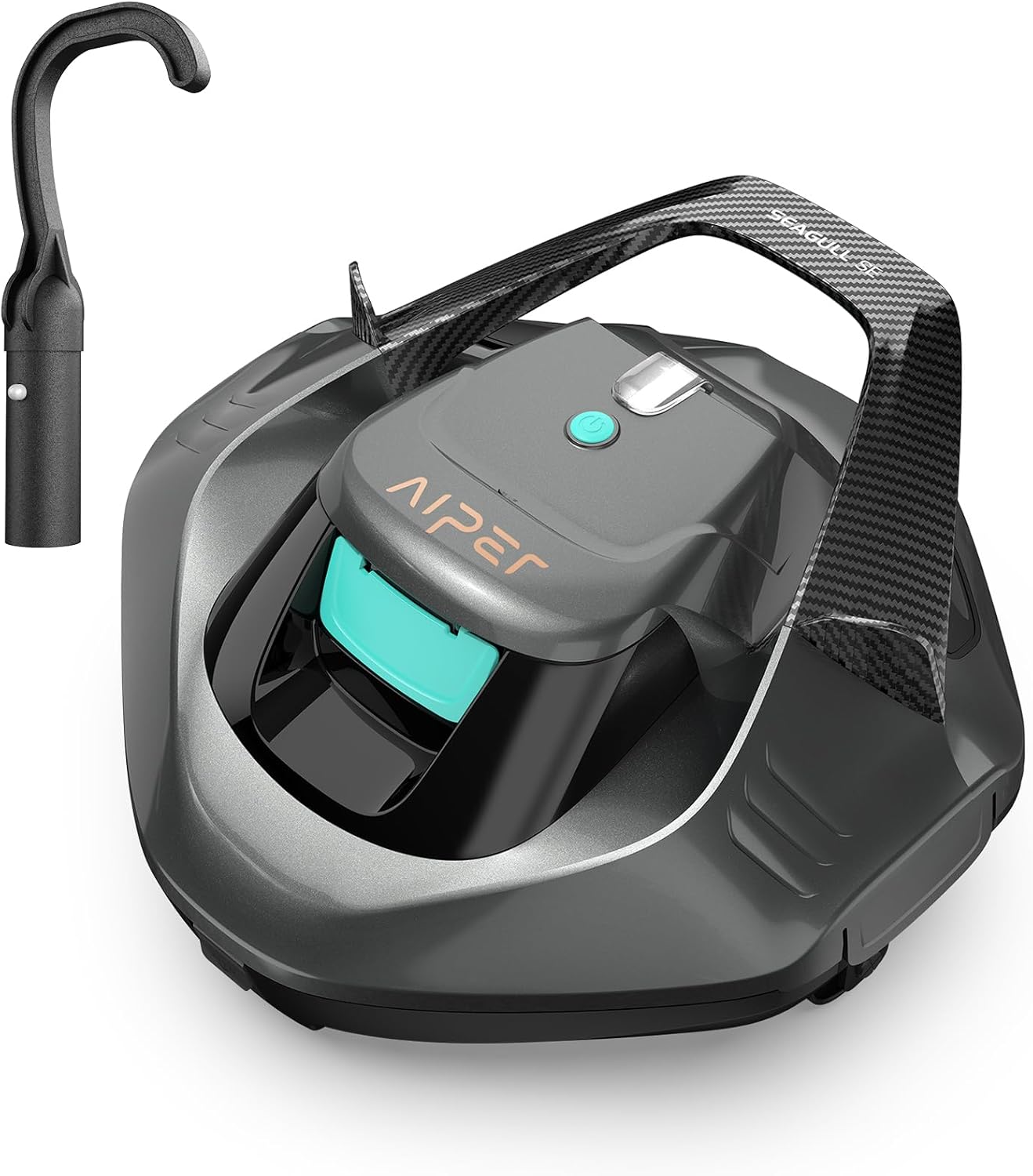
Aiper Seagull SE Cordless Pool Vacuum
Best for: Budget-minded owners of flat-bottom above-ground pools
Frequently asked questions
How long should a cordless cleaner run?
It should complete useful coverage of your pool with reserve capacity. The necessary duration depends on navigation, pool area, walls, debris and selected mode, so runtime alone is not a quality score.
Can a cordless pool robot stay in the water?
Remove it after the cycle unless the manufacturer explicitly permits extended immersion. Prompt removal protects the battery seals and keeps the cleaner away from swimmers and chemical treatments.
Are cordless models good for large pools?
Some are, but large and complex pools demand careful size and coverage checks. A corded model may be more practical when repeated cycles or uninterrupted power are priorities.
Final decision
Match the answer above to the exact model manual, pool measurements and maintenance routine. Amazon listings can change by seller, bundle and generation, so verify the product name and ASIN before relying on a feature.